Understanding JWTs: A Developer's Guide
Learn how JSON Web Tokens work, when to use them, and how to decode them with our free online tool.
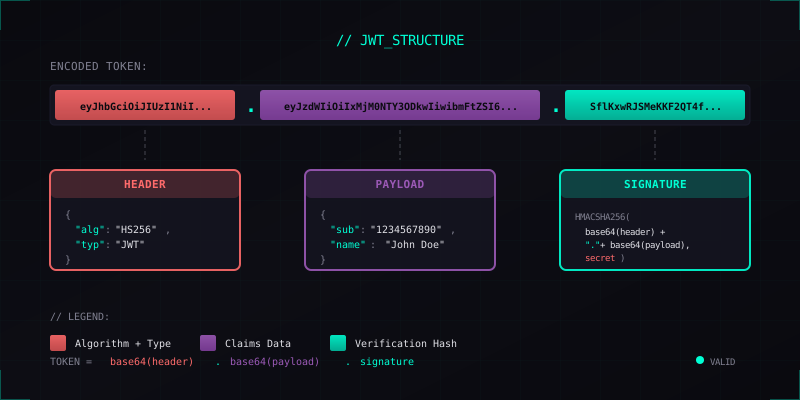
JSON Web Tokens (JWTs) have become the de facto standard for handling authentication in modern web applications. In this guide, we'll break down what JWTs are, how they work, and when you should (and shouldn't) use them.
What is a JWT?
A JWT is a compact, URL-safe way of representing claims between two parties. It consists of three parts separated by dots:
Each part is Base64URL encoded, making it safe to transmit in URLs and HTTP headers.
The Header
The header typically contains two pieces of information:
{
  "alg": "HS256",
  "typ": "JWT"
}alg: The signing algorithm (e.g., HS256, RS256)typ: The token type (always "JWT")
The Payload
The payload contains the claims—statements about the user and additional metadata:
{
  "sub": "1234567890",
  "name": "John Doe",
  "iat": 1516239022,
  "exp": 1516242622
}
Common claims include:
sub(subject): The user identifieriat(issued at): When the token was createdexp(expiration): When the token expiresiss(issuer): Who issued the token
The Signature
The signature ensures the token hasn't been tampered with. It's created by:
- Encoding the header and payload
- Signing with a secret key using the specified algorithm
HMACSHA256(
  base64UrlEncode(header) + "." + base64UrlEncode(payload),
  secret
)
Try It Yourself
Here's our JWT Decoder tool—paste any JWT to see its decoded contents:
When to Use JWTs
JWTs are great for:
- Stateless authentication: No need to store session data on the server
- Single Sign-On (SSO): Share authentication across services
- API authorization: Secure your REST APIs
- Information exchange: Safely transmit data between parties
Security Considerations
When working with JWTs, keep these best practices in mind:
- Always validate the signature - Never trust an unverified token
- Check expiration times - Reject expired tokens
- Use HTTPS - Tokens can be intercepted over insecure connections
- Keep secrets secure - Never expose your signing keys
- Consider token size - JWTs can get large with many claims
Common Mistakes
Avoid these pitfalls:
| Mistake | Why It's Bad |
|---|---|
| Storing sensitive data in payload | JWTs are encoded, not encrypted |
| Not setting expiration | Tokens live forever if compromised |
| Using weak secrets | Easy to brute-force |
| Storing in localStorage | Vulnerable to XSS attacks |
Conclusion
JWTs are a powerful tool for authentication when used correctly. Understanding their structure helps you make informed decisions about security and implementation.
Check out our other tools:
- Base64 Encoder/Decoder - Manually decode JWT parts
- JSON Formatter - Format decoded payload
- Hash Generator - Understand cryptographic hashing